
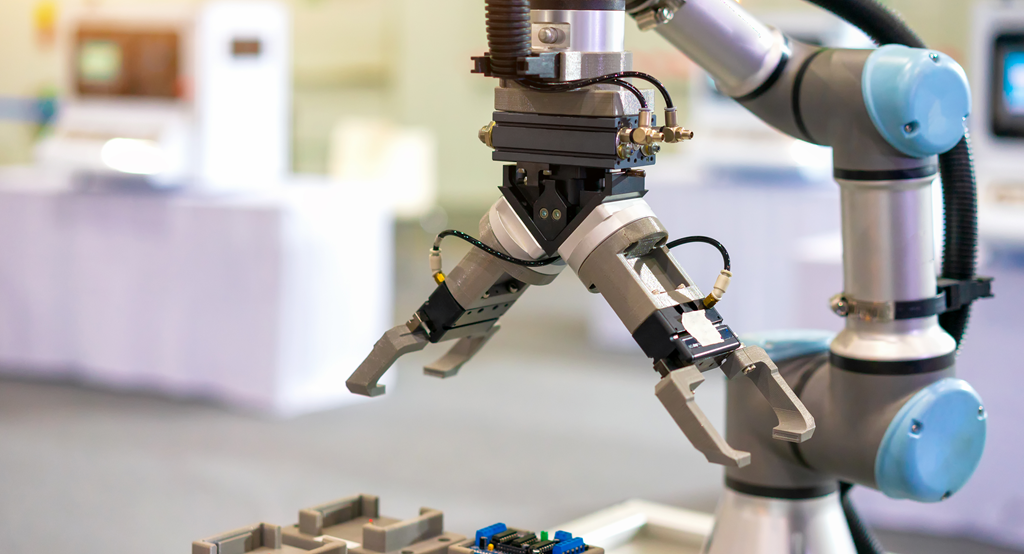
Stationary robots optimize production lines and reduce costs. With SRCI technology (Standard Robot Command Interface) and PROFINET® standards, integration is simplified, increasing flexibility and efficiency. Discover how these technologies foster innovation and shape the future of automation.
The Rise of Stationary Robots
Stationary robots are increasingly becoming an essential part of modern production lines, significantly enhancing automation and reducing operational costs. While these robots are a familiar sight in the automotive industry, their adoption is rapidly expanding across various other sectors. Medium-sized companies in industries such as food and beverage, packaging, and electronics are turning to robotic solutions to streamline their operations.
The widespread adoption of stationary robots can be attributed to several factors. Firstly, these robots have become smaller, more affordable, and easier to handle. This makes them accessible not only to large corporations but also to medium-sized enterprises looking to improve their production efficiency. As a result, robots are becoming an integral part of digital factories, where they play a crucial role in various applications — from assembly and packaging to quality control.
The Integration Challenge
Despite the numerous advantages, integrating stationary robots into production lines presents several challenges. One major hurdle is the compatibility between the robots' automation programs and the production line's PLC (Programmable Logic Controller)-controlled processes. Each robot manufacturer typically offers its proprietary automation program, while production lines are controlled via a PLC programming system. This discrepancy makes the integration process tedious and complex.
The SRCI Technology on PROFINET
SRCI technology is a game-changer in this context, simplifying the integration of robots into existing production lines. SRCI provides a standardized communication interface between robots and PLCs, addressing the compatibility issues that have traditionally made integration challenging.
A key component that enhances SRCI's effectiveness is PROFINET, an industrial networking standard that ensures real-time communication and interoperability between devices. PROFINET plays a crucial role by facilitating the seamless data exchange between robots and PLC systems, thereby enhancing the reliability and efficiency of the integrated automation processes.
SRCI technology, combined with PROFINET, enables seamless communication between different robot brands and PLC systems. By standardizing the automation protocols, SRCI eliminates the need for extensive customization and complex programming. PROFINET ensures that this communication is robust and real-time, further reducing the engineering and commissioning effort required to integrate robots into production lines.
Flexibility and Future-Proofing
With SRCI and PROFINET, companies can easily switch between different robot types and manufacturers without extensive reprogramming. This flexibility encourages innovation, allowing companies to adopt the latest robotic solutions without being locked into a single manufacturer's ecosystem.
Additionally, SRCI, supported by PROFINET, simplifies system maintenance and updates, making it easier to implement new features and improvements as they become available. This integration fosters a more adaptive and scalable production environment, driving continuous improvement and efficiency in modern manufacturing.